
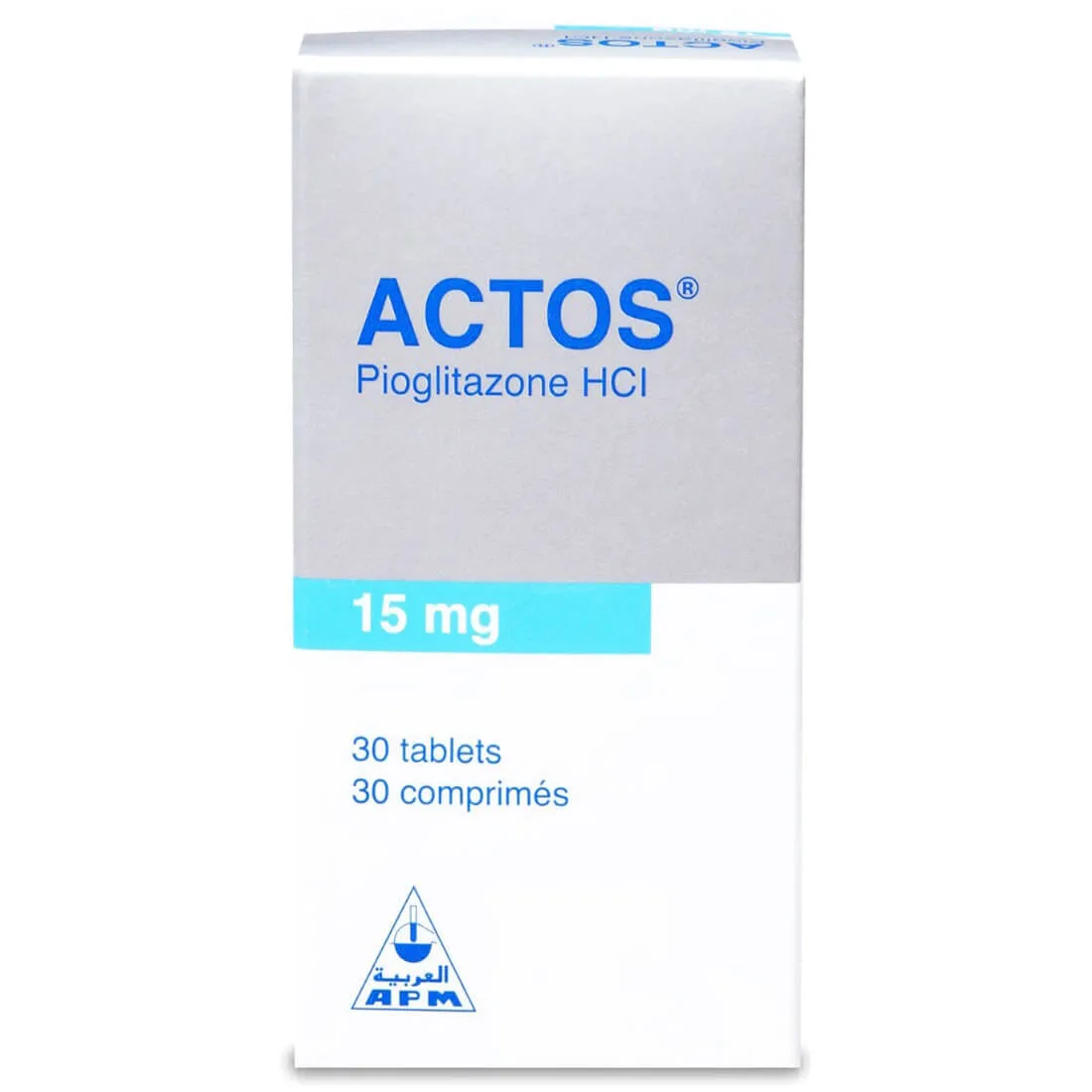
اقراص بيوجليتازون هيدروكلوريد 15 مجم
ما هو بيوجليتازون هيدروكلوريد وما هو إستخدامه:
- بيوجليتازون هيدروكلوريد هو دواء ينتمي إلى فئة من الأدوية تعرف باسم "ثيازوليدين ديون".
- يتم استخدامه لعلاج المرضى البالغين المصابين بداء السكري من النوع 2 (ارتفاع مستويات السكر في الدم بسبب مقاومة الأنسولين)
لا تتناول بيوجليتازون هيدروكلوريد:
- إذا كنت تعاني من حساسية تجاه بيوجليتازون هيدروكلوريد أو أي من مكونات هذا الدواء. أخبر طبيبك عن الحساسية والعلامات التي لديك.
- Tell your doctor about the allergy and what signs you had.
- إذا تم تشخيص إصابتك بفشل القلب من الفئة الثالثة أو الرابعة من NYHA (مراحل متقدمة من قصور القلب وهو اضطراب يتسبب في فقدان عضلة القلب لقدرتها على ضخ الدم بشكل صحيح).
التحذيرات والإحتياطات:
- تحدث إلى طبيبك أو الصيدلي إذا كنت تعاني من ردود فعل تحسسية مثل ضيق التنفس، والطفح الجلدي، وانتفاخ الوجه أو الرقبة، وانخفاض ضغط الدم والدوخة.
- قد يتسبب هذا الدواء في احتباس السوائل الذي يمكن أن يتفاقم أو يؤدي إلى قصور القلب.
- تبين أن خطر احتباس السوائل أعلى في المرضى الذين يستخدمون الأنسولين مع هذا الدواء ويعانون من قصور القلب الاحتقاني NYHA Class I وII (الفئات الأولى من قصور القلب؛ NYHA Class I يعني أنه ليس لديك أعراض ولا قيود على النشاط البدني العادي مثل ضيق التنفس عند صعود السلالم أو المشي؛ الفئة الثانية تعني أنك تعاني من أعراض خفيفة مثل ألم خفيف في الصدر أو ضيق في التنفس والحد الخفيف أثناء النشاط البدني العادي).
- تأكد من التحدث مع طبيبك قبل البدء في هذا الدواء إذا كنت تعاني من مشاكل في القلب (مثل قصور القلب).
- تحدث إلى طبيبك إذا ظهرت عليك علامات قصور القلب أثناء تناول هذا الدواء مثل تورم القدمين أو الكاحلين أو البطن، وزيادة الوزن، والتعب عند المجهود، وصعوبة التنفس وعدم انتظام ضربات القلب.
- قد يسبب هذا الدواء وذمة (تورم) وهذا هو ذات الصلة بالجرعة. إذا حدث هذا، فتأكد من إخبار طبيبك بذلك. طبيبك قد يقلل الجرعة إذا لزم الأمر.
- قد يكون هذا الدواء مرتبطًا بمشاكل الكبد التي يمكن أن تكون قاتلة.
- إذا اشتبه طبيبك في إصابة الكبد، فسوف يتأكد من إيقاف الدواء على الفور وسيقوم بتقييمك للسبب الحقيقي وراء تلف الكبد.
- لا ينبغي إعادة إعطاء هذا الدواء إذا لم يتمكن الطبيب من تحديد سبب آخر محتمل لتلف الكبد.
- قد يوصي طبيبك بإجراء اختبارات دم الكبد إذا كنت تعاني من مشاكل في الكبد وسيقرر وفقًا لذلك ما إذا كانت هناك حاجة إلى أي تعديلات في الجرعة.
- This medicine may increase the risk of fractures in female patients.
- This medicine may cause an increased risk of bladder cancer especially when used for a prolonged period of time.
- Make sure to tell your doctor if you have bladder cancer or if you previously had bladder cancer.
- You should not take this medicine if you have bladder cancer.
- This medicine may cause hypoglycemia (low blood glucose levels) when given with insulin or an insulin secretagogue.
- Your doctor may recommend a lower dose of the insulin or insulin secretagogue to prevent hypoglycemia.
- Talk to your doctor if you experience signs of hypoglycemia like shaking, tremors, palpitations, sweating and dizziness.
- High blood glucose levels may cause macular edema (eye edema).
- It is recommended that you do regular eye check-ups at your doctor’s office.
- This medicine was not shown to decrease the risk of macrovascular outcomes (e.g. heart, kidney, eye, brain and nerves complications).
- Talk to your doctor before taking this medicine if you have liver problems, heart failure, type 1 diabetes (juvenile diabetes) or diabetic ketoacidosis.
- Your doctor should do some blood tests including HbA1c (used to assess your glycemic control) before you start taking pioglitazone.
- Talk to your doctor before taking this medicine if you are a premenopausal woman (woman of childbearing potential).
- This medicine may increase ovulation which may increase the chance of pregnancy.
- Ask your doctor for contraceptive methods (birth control) that you can use to prevent pregnancy when taking this medication.
- Make sure to tell your doctor immediately if you get pregnant when taking this medicine.
Possible Side Effects:
- Possible side effects include signs of an allergic reaction, like rash and itching; red, signs of heart failure like, swelling of the feet, ankles or abdomen, weight gain, fatigue upon exertion, difficulty breathing and irregular heart rhythms, signs of liver problems like, stomach pain, nausea or vomiting, unusual or unexplained tiredness, dark urine, yellowing of your skin or the whites of your eyes and loss of appetite, edema and weight gain, fractures, bladder cancer, hypoglycemia (when given with insulin or other diabetes medicines), signs of macular edema like, vision changes. Other possible side effects include upper respiratory tract infection, infection of the sinuses, headache, muscle pain, sore throat, laboratory abnormalities, ovulation and increased risk of pregnancy.
Other medicines and Pioglitazone hydrochloride:
- Tell your doctor or pharmacist if you are taking, have recently taken or might take any other medications including prescription medicines, over the counter medicines (do not require a prescription), herbals, vitamins and supplements.
- If you are taking gemfibrozil (used to treat high triglycerides level).
- If you are taking rifampin (antibiotic).
How to take Pioglitazone hydrochloride:
Adults
- Recommended initial dose is 15 mg or 30 mg orally once daily.
- Starting dose should not exceed 15 mg once daily in patients with NYHA Class I or II heart failure.
- Your doctor may increase the dose by increments of 15 mg if glycemic control is not reached (depending on your HbA1c level).
- Maximum dose is 45 mg.
Children
- Effectiveness and safety of this medicine have not been established in children yet.
How To Use:
- Make sure to take your medication as prescribed by your doctor.
- Your doctor will tell you how much to take of this medication and may change doses depending on your response to the medication and other medicines that you are taking.
- Your doctor may recommend additional diabetes medicines to take along with pioglitazone.
- Take tablet with or without food.
- Swallow tablet whole with a full glass of water.
- Take tablet at the same time every day.
- If you are under stress (e.g. infection, accident, fever or surgery), make sure to talk to your doctor immediately.
- Your doctor may change the dose of your diabetes medicines if needed.
- It may take around 2 to 3 months for glycemic control to be reached.
- Make sure to follow a healthy diet and exercise program as recommended by your healthcare provider and get your blood sugar levels checked on a regular basis while taking pioglitazone.
How to store Pioglitazone hydrochloride:
- Store medication at 15 to 30 °C.
- Keep out of the reach of children and pets
- Do not use beyond the expiry date mentioned on the box
- Keep medication in its original pack to protect it from moisture and light
- Do not use damaged pills
- Do not dispose medication in the wastewater or household waste
المراجعات
لا توجد مراجعات بعد.